


Dungeons & Dragons 2014 vs. 2024: What Actually Changed?


For a game built on imagination, few things spark as much discussion as change. When a new iteration of Dungeons & Dragons arrives, it carries with it both excitement and uncertainty, particularly for players who have spent years building familiarity with an existing system. The transition from the 2014 ruleset—often referred to as Fifth Edition—to the revised 2024 version has prompted exactly this kind of conversation, not because the game has been radically reinvented, but because it has been carefully and deliberately reshaped.
At a glance, the two versions appear nearly identical. They share the same underlying structure, the same six ability scores, and the same recognizable rhythm of play. You still roll a d20, still gather a party, and still step into a world of shared imagination. Yet beneath that familiarity lies a series of meaningful refinements that influence how characters are created, how combat unfolds, how players interact with the narrative, and how Game Masters guide the experience. These changes are not always dramatic on paper, but they become increasingly apparent over the course of actual play.
This article is not about choosing a winner. Both versions remain fully capable of supporting rich, memorable campaigns. Instead, the goal is to provide clarity—to move beyond surface-level comparisons and examine how these differences manifest at the table. By understanding what has changed and why it matters, players and Game Masters alike can make informed decisions about which version best aligns with their preferred style of play.
A Shared Foundation: More Continuity Than Disruption
Before examining what has changed, it is important to acknowledge what has not. The 2024 revision is not a traditional new edition, but rather an evolution of the 2014 system. Core mechanics such as advantage and disadvantage, proficiency bonuses, action economy, and bounded accuracy remain intact. Characters still progress through twenty levels, and the fundamental structure of classes, spells, and encounters continues to feel familiar.
This continuity plays a crucial role in accessibility. Players transitioning from 2014 to 2024 are not required to relearn the game from the ground up; instead, they are adapting to a refined version of something they already understand. This reduces friction, shortens the learning curve, and ensures that existing knowledge retains its value. For long-time players, this sense of continuity provides reassurance that the identity of the game has been preserved.
At the same time, this evolutionary approach means that many of the most impactful changes are subtle. They are not always obvious when reading the rules in isolation, but they become clear through play. The experience of the game shifts not through sweeping overhauls, but through cumulative adjustments that streamline processes, clarify intent, and reinforce design consistency.
Character Creation: From Fixed Identity to Flexible Expression
One of the most significant philosophical shifts in the 2024 revision emerges during character creation. In the 2014 ruleset, a character’s mechanical identity is closely tied to their race, with ability score increases and certain defining traits predetermined by that choice. This structure provides clear archetypes, which can be helpful for new players, but it also introduces limitations that can constrain creative expression.
The 2024 version moves away from this model by decoupling ability score increases from race and placing greater emphasis on background. This change reflects a broader design philosophy in which a character’s capabilities are shaped more by their lived experience than by inherent traits. As a result, players are given greater freedom to build characters that align with their narrative concepts without feeling pressured toward specific mechanical combinations.
In practice, this shift has a noticeable impact at the table. Character creation becomes less about optimizing within predefined constraints and more about expressing a coherent identity. Players are encouraged to think in terms of who their character is and how they came to be, rather than which combination of options yields the most efficient result. This often leads to more diverse and narratively grounded characters, even within the same class.
That said, the 2014 system retains certain advantages. Its clearer archetypal structure can provide guidance, particularly for newer players who may feel overwhelmed by too many choices. By presenting more defined paths, it simplifies decision-making and reduces the cognitive load associated with building a character from scratch. In this sense, the two approaches reflect different priorities: one favoring flexibility and narrative alignment, the other emphasizing clarity and accessibility through structure.

Classes and Progression: Smoother Curves, Earlier Identity
Class design in the 2024 revision has been refined with a focus on consistency and player experience over time. One of the most impactful changes is the standardization of subclass progression. In the 2014 ruleset, subclasses are introduced at different levels depending on the class, which can create uneven early-game experiences. Some characters gain defining features almost immediately, while others must wait several levels before their identity fully emerges.
In 2024, subclasses are generally introduced at level three across all classes. This creates a more uniform progression and allows players to first understand the core mechanics of their class before adding additional complexity. The result is a smoother onboarding experience, particularly for new players who may benefit from a more gradual introduction to advanced features.
Another key refinement is the elimination of so-called “dead levels,” where a character gains little beyond incremental improvements such as hit points. Instead, progression is designed to feel more continuous, with each level offering a meaningful addition to the character’s capabilities. This creates a stronger sense of momentum, as players consistently receive new tools and options as they advance.
At the table, these changes contribute to a more satisfying sense of growth. Leveling up becomes an event worth anticipating, rather than a procedural step. However, this increased consistency does come with a trade-off. The asymmetry present in the 2014 design gave each class a distinct rhythm, and some players may miss that variation. In smoothing out progression, the 2024 version prioritizes balance and predictability over uniqueness in pacing.

Combat Flow: Streamlining Without Simplifying
Combat is one of the areas where the practical effects of the 2024 revision become most apparent. While the core structure remains unchanged, numerous refinements have been introduced to improve clarity and reduce friction. Rules have been reorganized, rewritten, and clarified to minimize ambiguity, making it easier for both players and Game Masters to understand what is happening in the moment.
These changes have a cumulative effect on pacing. With fewer edge cases and clearer language, combat tends to move more smoothly, requiring fewer interruptions to consult the rulebook. This is particularly beneficial for groups that value momentum and immersion, as it allows the focus to remain on the unfolding action rather than on resolving uncertainties.
At the same time, the system introduces additional tactical options, particularly for martial characters. Features such as weapon mastery provide new ways to engage with combat, increasing variety without significantly increasing complexity. This helps address a long-standing concern regarding the relative versatility of non-spellcasting classes, offering them more meaningful choices within the combat system.
Despite these improvements, the 2014 version retains its own appeal. Its quirks and inconsistencies can become part of a group’s shared understanding over time, creating a sense of familiarity and expertise. For players who enjoy mastering a system in depth, these nuances can add a layer of engagement that is less pronounced in a more streamlined design.

Player Agency: More Tools, More Influence
A defining characteristic of the 2024 revision is its emphasis on player agency. Across the system, players are given more opportunities to influence outcomes, whether through revised inspiration mechanics, class features, or other tools that allow for greater interaction with the dice. This reflects a design philosophy that prioritizes engagement and participation, even in moments of uncertainty.
At the table, this shift often results in a more dynamic experience. Players are encouraged to take risks, knowing they have mechanisms to respond when things do not go as planned. Failure is less likely to feel like a dead end and more likely to become a pivot point, leading to new developments in the story. This aligns well with narrative-focused playstyles, where the goal is not simply to succeed, but to create meaningful and memorable moments.
However, this increased agency also changes the tone of the game. In the 2014 system, outcomes are more heavily dictated by the dice, which can create a stronger sense of unpredictability. For some groups, this randomness is part of the appeal, contributing to moments of surprise and tension. The 2024 approach, by offering more tools for influence, shifts the balance slightly toward player control.

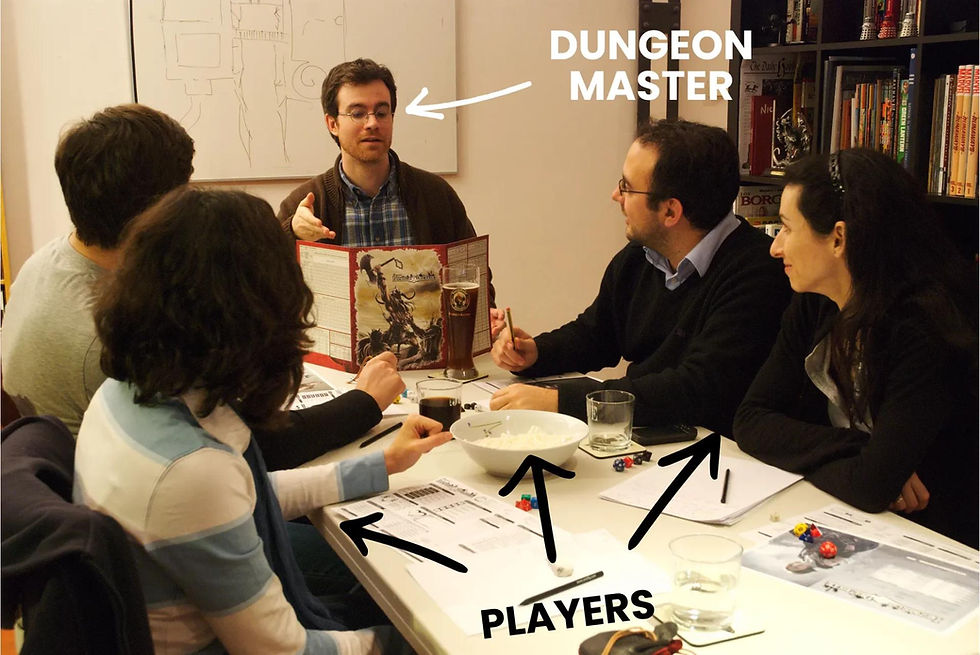
The Role of the Game Master: From Arbiter to Facilitator
The 2024 revision also brings subtle but important changes to the role of the Game Master. While the fundamental responsibilities remain the same, the presentation of the rules places greater emphasis on clarity, guidance, and collaborative storytelling. Tools for encounter building and adjudication are more structured, making it easier for Game Masters—particularly those with less experience—to run the game with confidence.
This shift is reflected not only in mechanics, but in tone. The Game Master is positioned less as an authority enforcing rules and more as a facilitator supporting the shared narrative. The system reinforces this by reducing ambiguity and providing clearer frameworks for common situations, allowing the Game Master to focus more on storytelling and less on interpretation.
For experienced Game Masters, this can streamline preparation and reduce cognitive load during play. For newer Game Masters, it lowers the barrier to entry, making the role feel more approachable. At the same time, those who prefer a looser, more improvisational style may find the 2014 version equally accommodating, as its less structured approach allows for greater flexibility in interpretation.
Accessibility and Onboarding: Lowering the Barrier
One of the clearest goals of the 2024 revision is to make the game more accessible. The rules are written with greater clarity, organization has been improved, and design decisions consistently aim to reduce friction for new players. This is not about simplifying the game to the point of losing depth, but about making it easier to learn and teach.
For groups introducing new players, these improvements can make a significant difference. Concepts are explained more directly, and the system is more forgiving of mistakes, allowing players to focus on the experience rather than on mastering every detail immediately. This creates a more welcoming environment, particularly for those encountering tabletop roleplaying for the first time.
In contrast, the 2014 version reflects a design philosophy that assumes a certain level of familiarity or willingness to learn through play. While it remains accessible, it can present a steeper initial learning curve. For experienced groups, this is rarely an issue, but for newcomers, the 2024 revision offers a smoother entry point.

Where 2014 Still Shines—and Where 2024 Moves Forward
Despite the many refinements introduced in 2024, the 2014 ruleset remains a powerful and relevant system. Its longevity has allowed it to develop an extensive ecosystem of supplements, third-party content, and community knowledge. Many groups have spent years refining their approach to it, creating a deeply personalized play experience that reflects their preferences and history.
There is also a certain charm in its imperfections. The inconsistencies and quirks that exist within the system can become part of a table’s identity, contributing to a sense of familiarity and shared expertise. For groups that value tradition and stability, 2014 continues to offer a reliable and rewarding framework.
At the same time, the 2024 revision represents a clear step forward in terms of design philosophy. Its emphasis on clarity, consistency, and player engagement reflects an evolving understanding of what players want from the game. By streamlining processes and expanding player agency, it supports a style of play that is both accessible and narratively rich.
Rather than replacing what came before, 2024 builds upon it, offering an alternative that addresses common pain points while preserving the core identity of the game. In this way, the two versions can be seen not as competitors, but as complementary tools, each suited to different styles of play.
Choosing What Works for Your Table
Ultimately, the decision between the 2014 and 2024 versions is not about determining which is objectively better. It is about identifying which system aligns most closely with your group’s preferences, experience level, and playstyle. Both versions are capable of supporting compelling stories, and both offer unique strengths that can enhance the tabletop experience.
Groups that value familiarity, a vast library of existing content, and a system they already understand may find that the 2014 ruleset continues to meet their needs. Its depth and established presence make it a dependable choice, particularly for long-running campaigns or tables with a strong sense of tradition.
On the other hand, groups seeking a more streamlined experience, with clearer rules and greater flexibility in character creation, may find the 2024 revision more appealing. Its design choices reduce friction and support a more collaborative, narrative-driven approach to play. It is particularly well-suited for groups that include new players or that prioritize accessibility.
It is also worth noting that many tables will naturally adopt a hybrid approach, drawing on elements from both versions to create a system that suits their needs. This flexibility is one of the strengths of Dungeons & Dragons as a whole, allowing groups to adapt the game to their preferences rather than adhering rigidly to a single framework.

Final Thoughts
The transition from 2014 to 2024 is best understood not as a replacement, but as a refinement. It reflects years of play, feedback, and evolving expectations, resulting in a system that is more polished, more accessible, and more aligned with contemporary approaches to tabletop roleplaying. At the same time, it preserves the core elements that have made the game enduringly popular.
Both versions have their place. Both are capable of supporting memorable campaigns and meaningful stories. The key is not to determine which is superior, but to understand how each functions and what it offers. With that understanding, players and Game Masters can make informed choices that enhance their experience at the table.
In the end, the rules are only part of the equation. What truly defines the game is the people who play it and the stories they create together. Whether you choose 2014, 2024, or a combination of both, the goal remains the same: to gather around the table and bring a shared world to life.
Bookmark this guide and share it with your group so you can decide together which version fits your table best.
Make sure to subscribe to our mailing list to receive periodic updates from RPG Storytelling.

Really helpful comparison for anyone deciding between the two editions. Keeping character sheets and campaign notes organized is also useful, and removing handwriting from RPG character sheets can make digital copies much easier to reuse.
Our 3rd grade class did a Christmas party and I pulled 25 Christmas bingo boards on Friday afternoon during prep.
Kids loved that the icons were actually varied instead of the same snowman repeated on every card like that other free site does.